

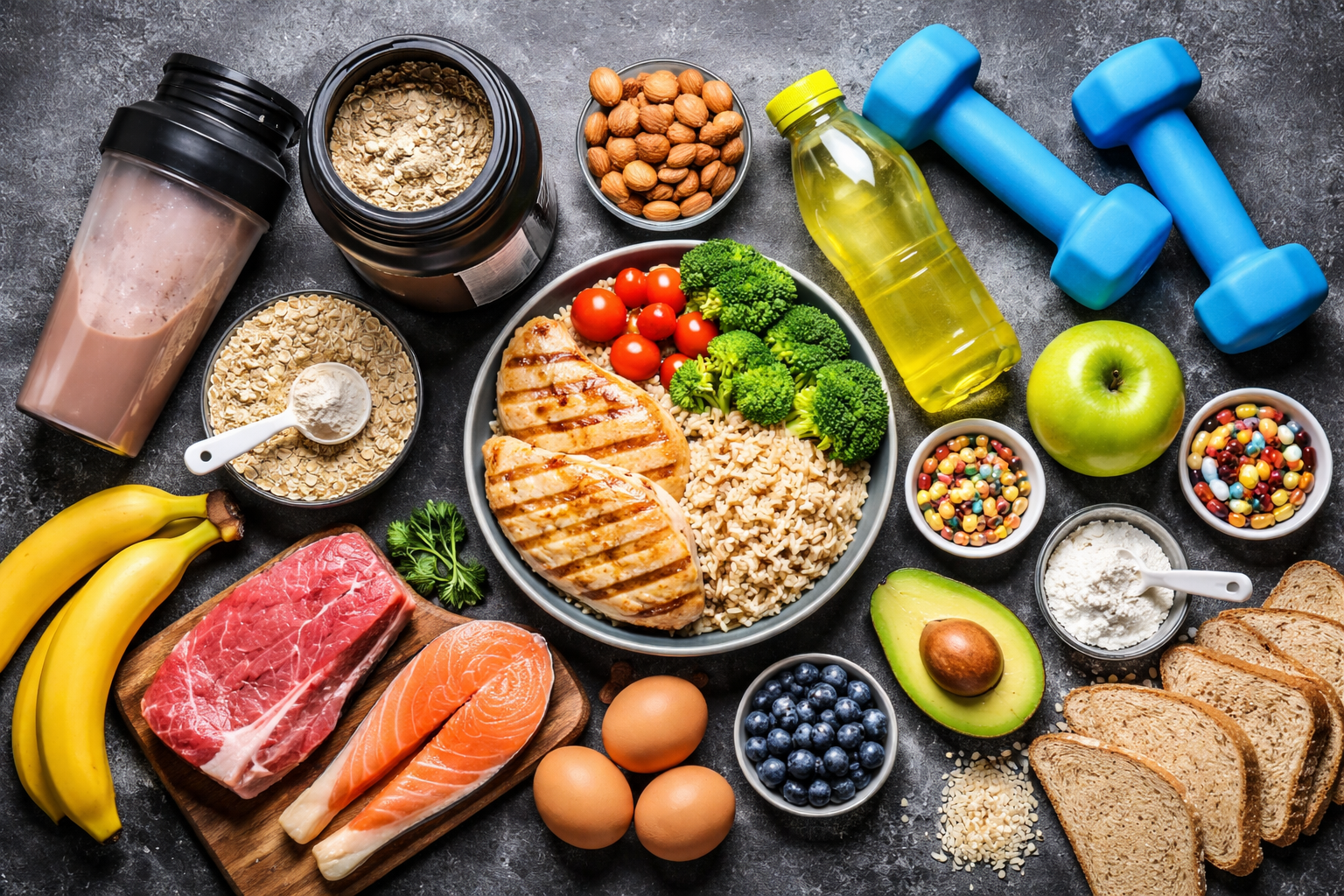
If you’re just starting your fitness journey, you’ve probably heard that nutrition is just as important as training. In fact, what you eat can directly impact your energy, performance, recovery, and results.
This beginner-friendly guide will walk you through the fundamentals of sports nutrition so you can build muscle, lose fat, and feel your best—without confusion or overwhelm.
What Is Sports Nutrition?
Sports nutrition is the practice of eating and supplementing in a way that supports physical activity and athletic performance. It focuses on providing your body with the right nutrients at the right time to:
- Improve performance
- Support muscle growth
- Enhance recovery
- Maintain overall health
Understanding Calories: The Foundation
Before diving into nutrients, you need to understand calories.
- Calories in > Calories out → Weight gain (muscle or fat)
- Calories in < Calories out → Weight loss
- Calories in = Calories out → Maintenance
Your goal determines your calorie intake:
- Want to build muscle? Eat in a slight surplus
- Want to lose fat? Eat in a deficit
Macronutrients Explained
Macronutrients are the three main nutrients your body needs in large amounts:
1. Protein (Muscle Builder)
Protein helps repair and grow muscles.
Sources:
- Chicken, fish, eggs
- Dairy products
- Protein powders
Beginner recommendation:
~1.6–2.2g per kg of body weight per day
2. Carbohydrates (Energy Source)
Carbs fuel your workouts and keep your energy high.
Sources:
- Rice, oats, potatoes
- Fruits and vegetables
- Whole grains
Don’t fear carbs—they’re essential for performance.
3. Fats (Hormones & Health)
Healthy fats support hormone production and overall health.
Sources:
- Nuts, seeds
- Avocados
- Olive oil
Around 20–30% of your daily calories should come from fats.
Nutrient Timing (Keep It Simple)
You don’t need to overcomplicate timing, but here are basics:
Before Workout
- Eat carbs + some protein
- Example: oatmeal with protein or chicken with rice
After Workout
- Focus on protein + carbs
- Example: protein shake + banana
The goal is to fuel performance and support recovery.
Do Beginners Need Supplements?
Supplements are optional—but helpful.
Most Useful Beginner Supplements:
- Protein powder → convenient protein intake
- Creatine monohydrate → strength and muscle growth
- Pre-workout → energy and focus
Important: Supplements support your diet—they don’t replace it.
Hydration Matters More Than You Think
Even slight dehydration can reduce performance.
Basic rule:
- Drink water throughout the day
- Add electrolytes if you sweat heavily
Common Beginner Mistakes
Avoid these early on:
- Not eating enough protein
- Cutting carbs too aggressively
- Relying only on supplements
- Skipping meals
- Expecting instant results
Consistency beats perfection.
Simple Beginner Nutrition Plan
Here’s a basic daily structure:
Breakfast:
Eggs + oats + fruit
Lunch:
Chicken + rice + vegetables
Snack:
Protein shake + nuts
Dinner:
Fish or meat + potatoes + veggies
Optional:
Post-workout shake
Final Tips for Success
- Start simple—don’t overcomplicate
- Track your food (at least in the beginning)
- Focus on whole foods first
- Be consistent for at least 4–8 weeks
- Adjust based on results
Conclusion
Sports nutrition doesn’t have to be confusing. By understanding calories, macronutrients, and basic timing, you can build a strong foundation that supports your fitness goals.
Remember:
- Train hard
- Eat smart
- Stay consistent
That’s the formula for real results.