

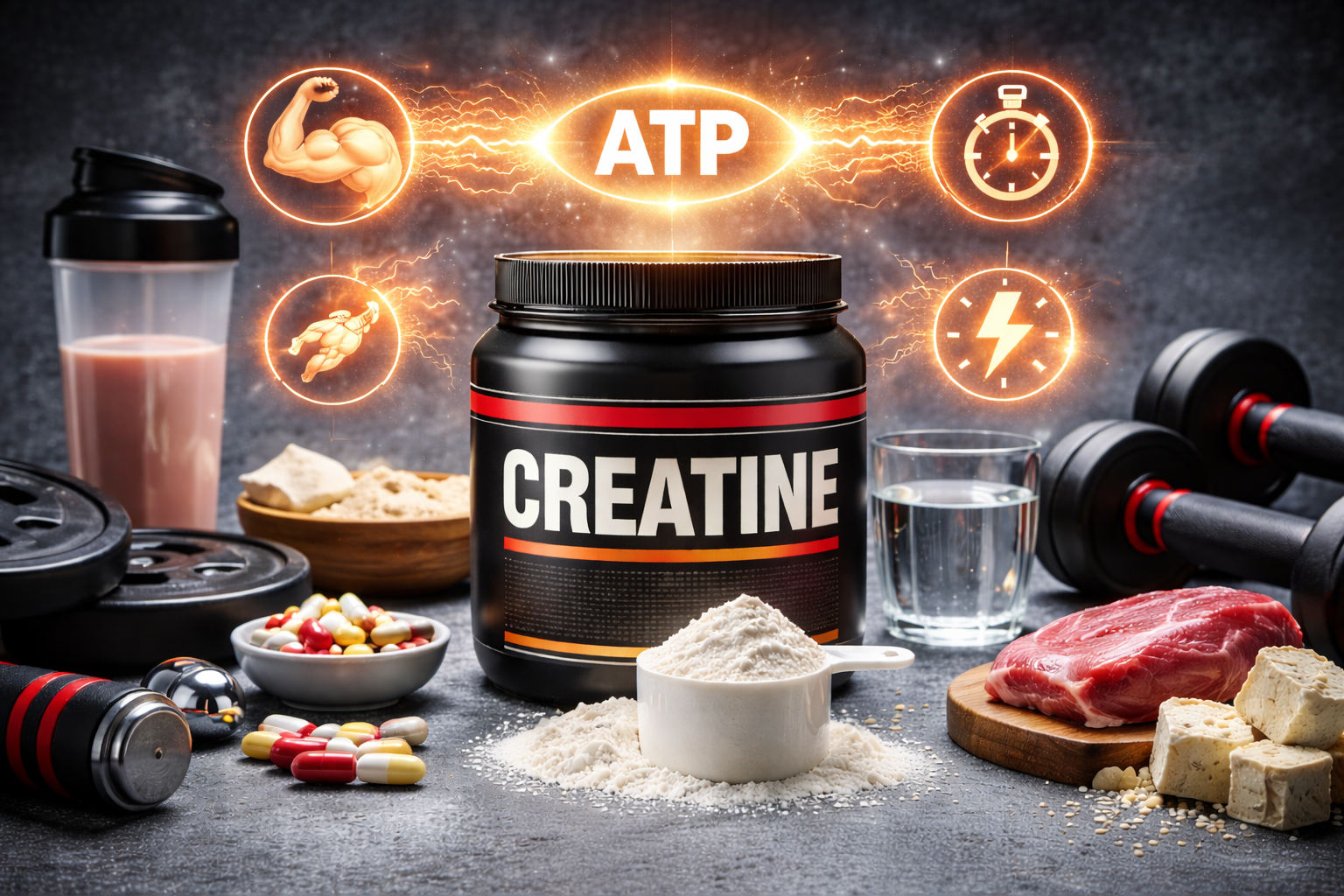
Creatine is one of the most popular and well-researched supplements in the fitness world. But despite its popularity, many people still don’t fully understand what it actually does.
Does it build muscle? Increase strength? Cause water retention?
Let’s break it down in simple, science-based terms.
What Is Creatine?
Creatine is a natural substance found in your muscles. Your body produces it from amino acids, and you also get small amounts from foods like:
- Red meat
- Fish
About 95% of creatine in your body is stored in your muscles.
What Does Creatine Do in the Body?
Creatine helps your body produce energy—specifically during short, intense activities like:
- Weightlifting
- Sprinting
- High-intensity training
Here’s how it works:
Your muscles use a molecule called ATP (adenosine triphosphate) for energy.
But ATP runs out quickly.
Creatine helps regenerate ATP faster, allowing you to:
- Lift heavier
- Perform more reps
- Train harder
Key Benefits of Creatine
1. Increased Strength
Creatine allows you to push harder in workouts, which leads to strength gains over time.
2. Muscle Growth
More strength = better workouts → more muscle growth.
It also helps by:
- Increasing water content in muscle cells (cell hydration)
- Supporting protein synthesis
3. Better Performance
Creatine improves performance in short bursts of high-intensity exercise.
It’s not for endurance—it’s for power.
4. Faster Recovery
Some studies suggest creatine may help reduce muscle damage and improve recovery.
Does Creatine Cause Water Retention?
Yes—but not in a bad way.
Creatine pulls water into your muscle cells, not under your skin.
This makes muscles look fuller and can slightly increase body weight.
Is Creatine Safe?
Creatine is one of the most studied supplements in the world.
Research consistently shows it is:
- Safe for long-term use
- Not harmful to healthy kidneys
- Well tolerated by most people
How to Take Creatine
Recommended Type:
Creatine Monohydrate (the most effective and affordable)
Dosage:
- 3–5 grams per day
When to Take It:
- Anytime (consistency matters more than timing)
Optional: Some people do a “loading phase,” but it’s not necessary.
Common Myths About Creatine
“Creatine is a steroid”
False. It’s a natural compound, not a hormone.
“It damages kidneys”
False (for healthy individuals).
“You must cycle it”
Not required.
Who Should Use Creatine?
Creatine is great for:
- Beginners and advanced lifters
- People looking to build muscle
- Athletes in strength and power sports
Who Might Avoid It?
- People with existing kidney conditions (consult a doctor)
- Those who don’t do high-intensity training
Final Thoughts
Creatine works by helping your body produce energy more efficiently during intense exercise.
That leads to:
- Better performance
- More strength
- Increased muscle growth
Simple, effective, and backed by science.
Conclusion
If you want a supplement that actually works, creatine is one of the best choices you can make.
You don’t need anything complicated—just consistency and proper training.